Featured
Table of Contents
It's essentially the "I" or your feeling of individuality. Your aware reasoning and understanding of the world around you. Experiences you purposely recall. Feelings you're proactively experiencing and processing. It preserves a coherent feeling of self as you engage with your environment, providing you awareness of how you match the world and assisting you preserve your individual story about on your own gradually.
They can also be favorable or neutral facets of experience that have actually just fallen out of mindful recognition. Carl Jung's personal subconscious is necessary because it substantially shapes your thoughts, feelings, and actions, also though you're normally unaware of its influence. Coming to be conscious of its contents allows you to live even more authentically, heal old injuries, and expand emotionally and mentally.

A failed to remember childhood rejection might trigger unusual anxiety in social circumstances as an adult. Complicateds are psychologically charged patterns created by previous experiences.
Common examples consist of the Hero (the endure lead character who conquers obstacles), the Mommy (the nurturing protector), the Wise Old Man (the mentor figure), and the Shadow (the hidden, darker facets of individuality). We come across these stereotypical patterns throughout human expression in ancient misconceptions, religious messages, literary works, art, fantasizes, and modern-day storytelling.
Strength Building in Trauma Therapy
This facet of the archetype, the totally biological one, is the proper concern of scientific psychology'. Jung (1947) believes icons from different cultures are typically extremely similar since they have actually emerged from archetypes shared by the whole human race which belong to our cumulative subconscious. For Jung, our primitive past becomes the basis of the human mind, directing and influencing present habits.
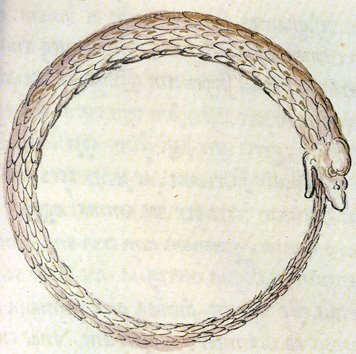
Jung labeled these archetypes the Self, the Personality, the Darkness and the Anima/Animus. The character (or mask) is the external face we present to the globe. It hides our real self and Jung defines it as the "consistency" archetype. This is the public face or role a person provides to others as someone different from that we really are (like a star).
The term originates from the Greek word for the masks that ancient stars made use of, representing the duties we play in public. You can think about the Personality as the 'public relations depictive' of our vanity, or the packaging that provides our vanity to the outdoors globe. A well-adapted Persona can considerably add to our social success, as it mirrors our real individuality characteristics and adapts to various social contexts.
An example would certainly be an instructor who continually treats every person as if they were their pupils, or somebody who is extremely reliable outside their work setting. While this can be irritating for others, it's even more problematic for the specific as it can cause an incomplete realization of their full individuality.
Developing Psychological Stability Throughout Ego-state therapy
This generally causes the Identity incorporating the extra socially appropriate characteristics, while the less desirable ones end up being component of the Darkness, an additional vital part of Jung's character concept. Another archetype is the anima/animus. The "anima/animus" is the mirror picture of our biological sex, that is, the subconscious feminine side in males and the masculine propensities in ladies.
As an example, the phenomenon of "love prima facie" can be explained as a guy predicting his Anima onto a female (or the other way around), which results in a prompt and extreme destination. Jung acknowledged that supposed "masculine" characteristics (like freedom, separateness, and hostility) and "womanly" qualities (like nurturance, relatedness, and compassion) were not restricted to one sex or premium to the other.
Childhood Trauma and Adult Mental Health
This is the animal side of our personality (like the id in Freud). It is the source of both our imaginative and harmful powers. In accordance with evolutionary concept, it might be that Jung's archetypes show predispositions that as soon as had survival value. The Darkness isn't merely unfavorable; it offers deepness and equilibrium to our individuality, mirroring the concept that every aspect of one's character has a compensatory equivalent.
Overemphasis on the Persona, while neglecting the Darkness, can lead to a superficial personality, busied with others' assumptions. Shadow elements usually manifest when we predict disliked traits onto others, serving as mirrors to our disowned elements. Involving with our Darkness can be challenging, yet it's crucial for a well balanced individuality.
Understanding Accessibility of Remote Ego-state therapy
This interplay of the Identity and the Darkness is often checked out in literature, such as in "Dr. Jekyll and Mr. Hyde", where personalities come to grips with their twin natures, better illustrating the engaging nature of this facet of Jung's concept. Ultimately, there is the self which offers a feeling of unity in experience.
That was definitely Jung's idea and in his publication "The Undiscovered Self" he suggested that most of the problems of modern life are brought on by "guy's progressive alienation from his second-nature foundation." One aspect of this is his views on the importance of the anima and the animus. Jung suggests that these archetypes are items of the collective experience of guys and females living with each other.
For Jung, the outcome was that the full mental development both sexes was weakened. Along with the dominating patriarchal society of Western world, this has actually led to the devaluation of feminine top qualities altogether, and the control of the identity (the mask) has elevated insincerity to a method of life which goes undoubted by millions in their everyday life.
Each of these cognitive features can be shared mostly in a withdrawn or extroverted form. Allow's dive deeper:: This duality is about just how individuals make decisions.' Thinking' people make decisions based on logic and objective factors to consider, while 'Feeling' individuals make decisions based upon subjective and personal values.: This duality problems exactly how individuals perceive or gather information.

Latest Posts
Lasting Transformation Following Couples Work
Affordable EMDR Options
Cognitive Behavioral Therapy for Cross-Cultural Contexts